




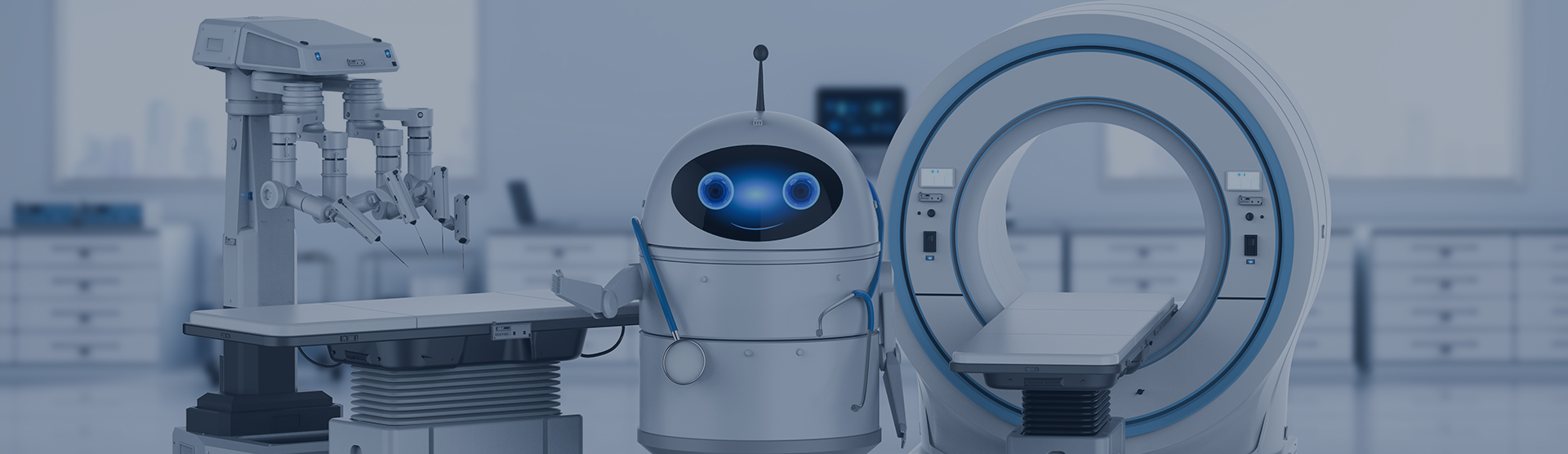
The medical device industry has extremely stringent requirements for precision, stability, cleanliness, and reliability. Bearings, as critical transmission components, directly impact the diagnostic accuracy, treatment safety, and operational stability of medical equipment. Their applications are highly focused on three main categories: high-precision diagnostic and treatment equipment, rehabilitation equipment, and assistive medical devices, and must meet specific requirements such as biocompatibility, low noise, low vibration, and ease of sterilization.
In high-precision diagnostic and treatment equipment, the application of bearings is particularly crucial. For example, the rotating gantry of a CT scanner needs to operate smoothly at extremely high speeds. Precision angular contact ball bearings or crossed roller bearings enable high-precision positioning under high-speed rotation, ensuring the clarity and resolution of tomographic images, while low vibration characteristics reduce interference with patients. The gradient coil drive mechanism in MRI equipment uses non-magnetic bearings to avoid magnetic field interference, ensure magnetic field uniformity, and improve image quality. The probe oscillation mechanism in ultrasound diagnostic equipment uses miniature rolling bearings to achieve flexible and precise probe oscillation, ensuring comprehensive detection range.

Providing a variety of high-performance bearing products and customized services. No matter where you are, you will get the best service to go along with the best bearings.