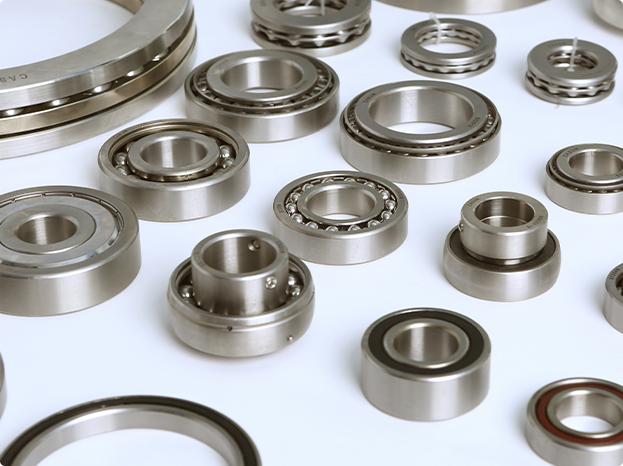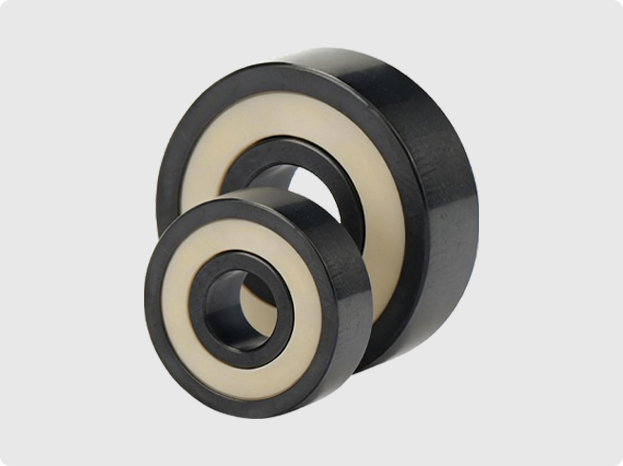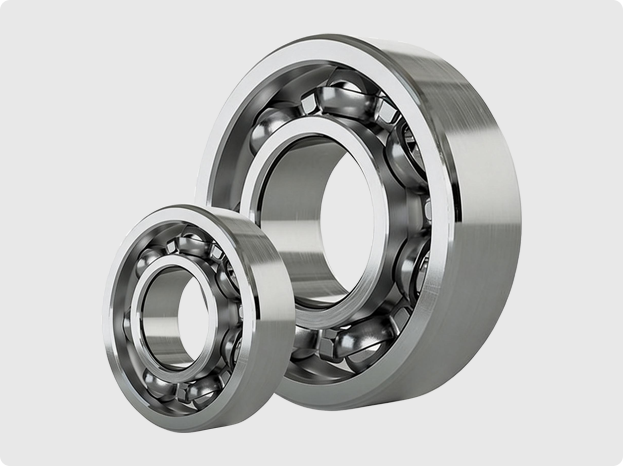

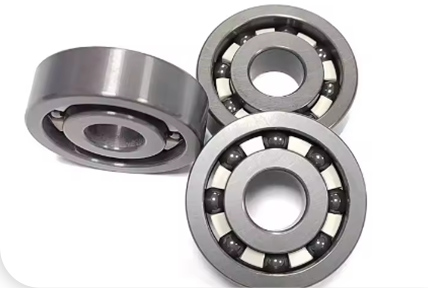
Hybrid bearings typically refer to a combination structure of steel raceways and ceramic rolling elements (the material combination can also be adjusted according to operating conditions). They combine the advantages of both metal and ceramic materials, making them a special type of bearing that balances performance and cost. Their core characteristics are as follows:
High Speed, Low Heat Generation: Ceramic rolling elements have low density and low centrifugal force, resulting in a limiting speed 30%~50% higher than all-steel bearings; they also have a low coefficient of friction, generating less heat during operation and exhibiting excellent temperature rise control.
Wear Resistance and Fatigue Resistance: Ceramic rolling elements have a hardness far exceeding that of steel (1500~1800 HV), and their wear resistance is 5~10 times that of steel rolling elements. They also have strong resistance to fatigue spalling and a longer service life.
Insulation and Anti-Electro-Electro-Corrosion: Ceramic rolling elements are natural insulators, blocking stray currents and preventing pitting damage to the bearing raceways. No additional coating is required, making them suitable for motors, frequency converters, and other electrical equipment.
High and Low Temperature Stability: Wide operating temperature range (-270℃~+800℃), they do not soften or oxidize at high temperatures and do not become brittle at low temperatures, making them suitable for extreme temperature difference conditions.
High lubrication compatibility: The smooth surface of ceramic rolling elements allows for compatibility with solid lubrication, high-temperature grease, or lean lubrication conditions, reducing the frequency of lubrication maintenance.
Balanced cost and performance: Compared to all-ceramic bearings, steel raceways significantly reduce costs; compared to all-steel bearings, performance is significantly improved, offering a superior cost-performance ratio.
Excellent corrosion resistance: Ceramic rolling elements are chemically inert and resistant to acids, alkalis, and salt spray corrosion. When paired with stainless steel raceways, corrosion resistance is further enhanced, making them suitable for humid and chemical environments.

Providing a variety of high-performance bearing products and customized services. No matter where you are, you will get the best service to go along with the best bearings.